Revisiting the Year 2000: A Wake-Up Call from the Millennium Bug and Misguided End-Time Hysteria
September 28, 2025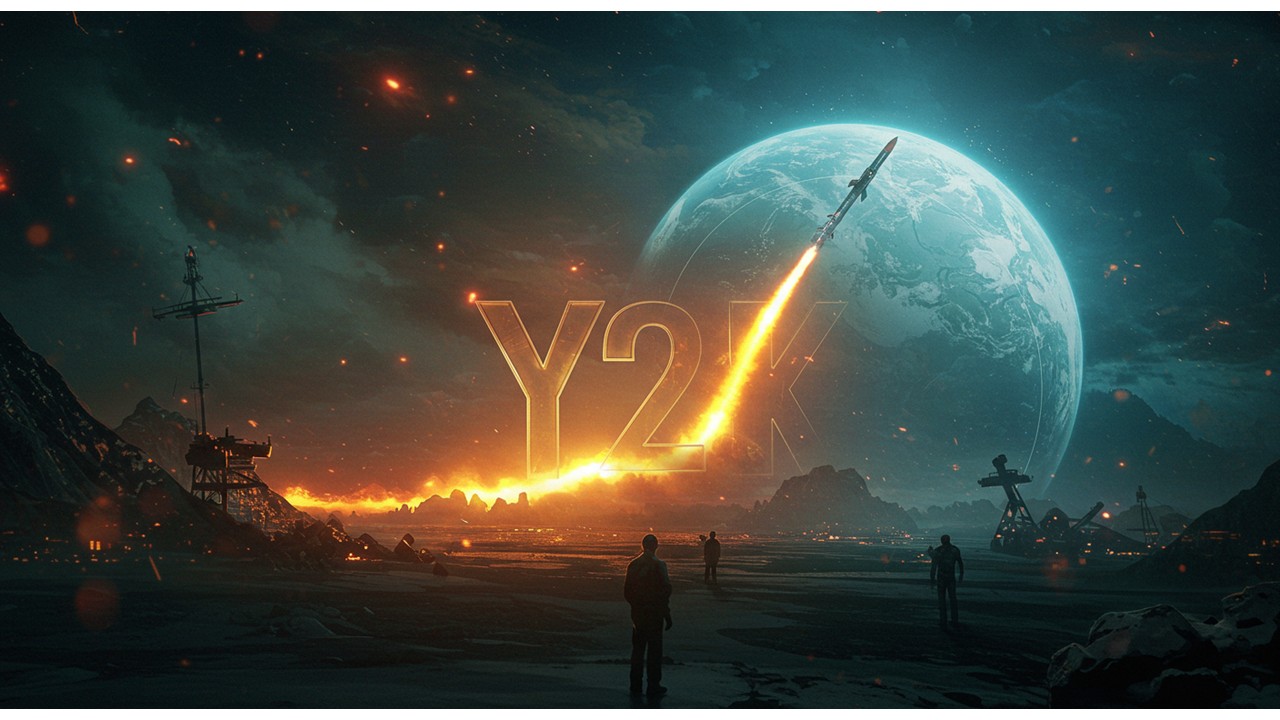
Revisiting the Year 2000: A Wake-Up Call from the Millennium Bug and Misguided End-Time Hysteria
Once again, just this past September 22–23, predictions spread that the rapture would occur—but, as with all date-setting before it, nothing happened. For some, it was a disappointing letdown; for others, another reason to mock the Christian faith. But for me, it served as a reminder of a much larger hysteria that swept through the world and the church 25 years ago: the Year 2000, or what we then called the Millennium Bug (Y2K).
We all long for something hopeful, settled, and better than what we are and what we can be right now. That longing itself is not wrong—it points us to the reality that this world cannot fully satisfy us. Exploring such longings is meaningful, but only if they are anchored in the Lord, the One who keeps His promises. In a world that offers nothing but chaos, uncertainty, and confusion, what happens when we try to explore those desires or prepare for the future using only our limited human capacity? More often than not, we end up magnifying fear instead of resting in faith.
This tension came to the surface at the dawn of the new millennium. What should have been a time of quiet trust in God’s providence instead became marked by widespread panic over what was called the Millennium Bug (Y2K). Looking back, it was more than a technological issue—it revealed how easily the church, along with the culture, can drift into fear-driven speculation when hope is not firmly rooted in God’s Word.
I was a college student in the late 1990s going to the year 2000 and I was deeply involved in the life of the church. As far as I remember, nearly early every Sunday during that season, a lot of pulpits was saturated with sermons on the end times—filled with interpretations from the book of Daniel, Revelation, and prophecies. There was a palpable intensity, a growing conviction among many that we were living at the edge of time. The turn of the millennium—the year 2000—was looming, and with it came what we all knew then as the Millennium Bug or Y2K.
There was widespread fear that computer systems across the globe would collapse. Since many systems used two-digit year formats (e.g., “99” for 1999), the transition to “00” was feared to confuse computers into thinking it was 1900 again—leading to massive failures. Conspiracy theories flourished: missiles accidentally launching, banking systems crashing, governments falling apart, chaos erupting worldwide. That fear found its way into the church. Preachers proclaimed that the Lord's coming was surely at hand. Revival services and youth camps were under the theme of end times. The atmosphere was thick with emotionalism, urgency, and eschatological anxiety.
Looking back 25 years later, I see more clearly what was happening. Churches, notably in the Philippines, majority of them were deeply influenced by Dispensational End-Times Theories, often divorced from a careful and contextual reading of Scripture. There were constant references to "signs of the times," but those signs were often tied to newspaper headlines and speculative interpretations rather than solid exegesis. Alongside this was a growing interest in "exposing the works of darkness." Entire teachings were dedicated to linking popular music, corporations, logos, and products to satanic influences. Masonic symbols were dissected. Hollywood was labeled the devil’s playground. While there may have been truth in some warnings, much of it drifted into conspiracy-laced, unbiblical sensationalism.
I still remember how some students in schools were personally discouraged from pursuing further education. Employment and planning for the future were considered pointless. “Why bother,” they said, “if the world is ending?” It became clear that the church was not just reacting to Scripture—it was reacting to fear, misinterpretation, and at times, outright speculation. Sadly, this movement was marked by false revivals, not grounded in biblical repentance but driven by emotional manipulation. Youth camps turned into spectacles of hype and noise, not genuine transformation. It was a form of hyper-Pentecostalism, fed by charismatic ideologies more interested in signs and wonders than in sound doctrine.
The most heartbreaking part was that many of those who predicted the Lord’s coming with certainty—assigning dates, making declarations—came from within the evangelical camp. But true evangelicalism does not do this. True evangelicalism holds to the sufficiency, inerrancy, and authority of the Scriptures. It does not set dates for the Lord’s return (Matthew 24:36), nor does it twist prophecies into personal agendas or trending fears.
Now, decades later, I realize how essential it is for the church to be biblical—not emotional. The problem wasn’t the anticipation of Christ’s return (which is good and biblical), but the methods, motivations, and misinterpretations that led many astray. We need churches today who can rightly discern both the signs of the age (the cultural pressures pulling the church away from truth) and the signs of the times (God’s providential working in history according to His Word)—not through conspiracies, but through Scripture.
The church must never be shaped by fads, fears, or the latest religious trends. The Spirit-filled, Word-rooted church is not reactive—it is grounded. Revival will not come through emotional frenzy but through deep repentance, reformation, and a return to biblical truth.
As we reflect on the year 2000, may it serve as a sobering lesson. The Lord is coming—this we believe. But until He does, we must live soberly, righteously, and faithfully, always ready, yet never swayed by false alarms.
The failed rapture prediction of September 22–23 this year is just another reminder that history repeats itself. From Y2K panic to modern date-setting, the pattern is the same: fear magnified, faith misplaced, and the church distracted from her true calling. Let us not be carried away by hysteria or headlines but instead stand firm in the unshakable Word of God.
The true hope of the church is not in timetables, conspiracies, or emotional hype—it is in Christ Himself, who has promised, “Surely I am coming soon” (Revelation 22:20). Our task until then is not to chase signs but to live faithfully, proclaiming the gospel, loving one another, and anchoring our hope in the Lord who never fails.
Write a Comment
Comments for this post have been disabled.